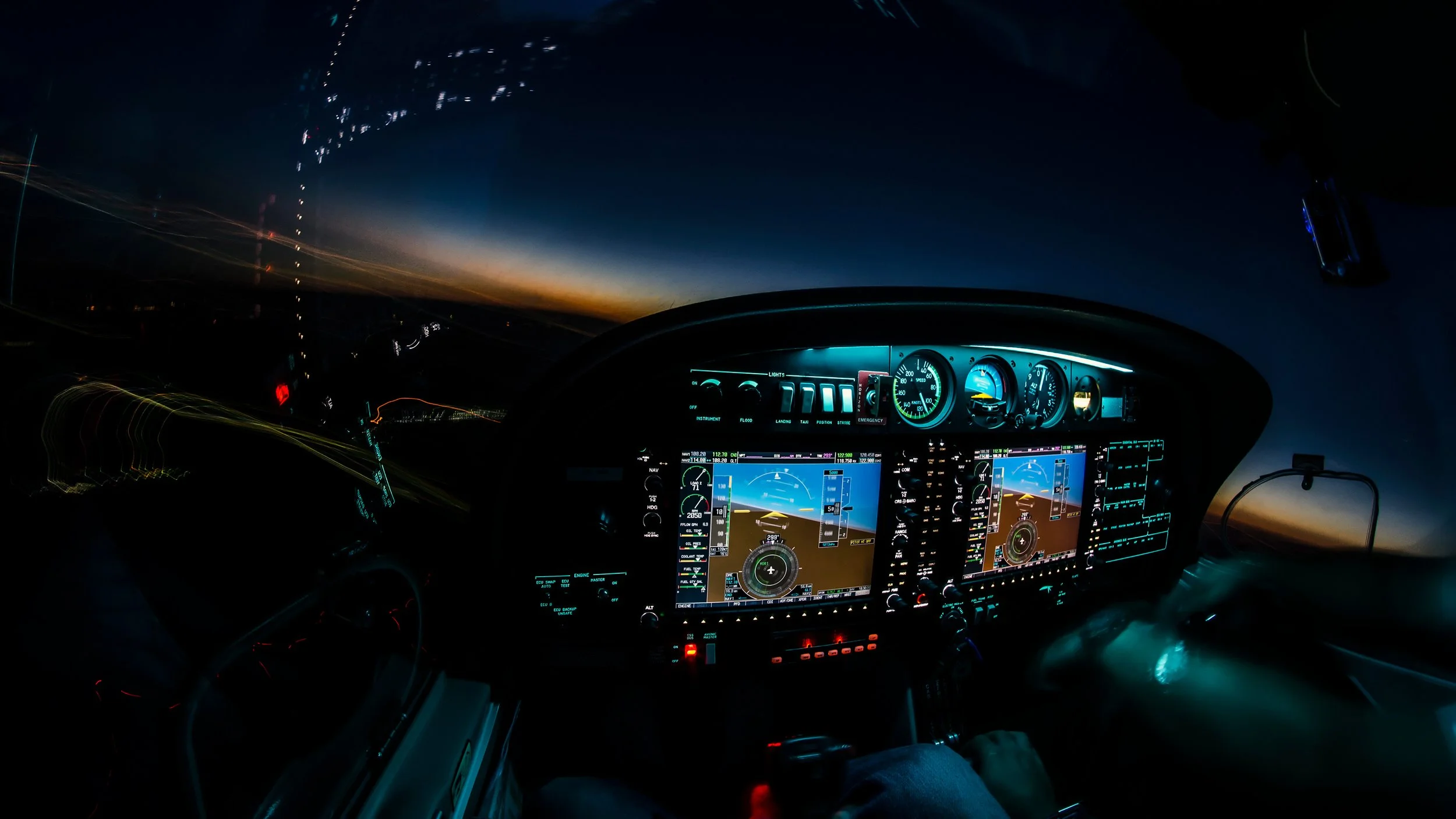
READY TO BEGIN INSTRUMENT TRAINING
Instrument rating
An Instrument Rating teaches you to control and navigate an aircraft by reference to its instruments and operate within the Instrument Flight Rules system.
It can expand the usefulness of your Private Pilot Certificate and prepare you for the next stage of recreational or professional flying. An Instrument Rating does not eliminate weather or aircraft limitations, but it gives you stronger decision-making skills and more options when visual flying is not appropriate.
WHY EARN AN INSTRUMENT RATING?
Instrument training helps you:
Become a more precise and confident pilot
Improve your weather knowledge and decision-making
Communicate and operate within the IFR air traffic control system
Fly instrument departures, routes, and approaches
Better manage unexpected changes in weather
Prepare for commercial pilot and professional aviation opportunities
WHAT YOU’LL LEARN
Your instrument training will include:
Flight solely by reference to instruments
IFR flight planning and weather analysis
Air traffic control clearances and procedures
Instrument navigation systems
Holding procedures
Precision and nonprecision instrument approaches
Missed-approach procedures
IFR cross-country operations
Emergency procedures
Aeronautical decision-making and risk management
Preparation for the FAA knowledge and practical tests
INSTRUMENT RATING REQUIREMENTS
To earn an Instrument Rating for an airplane, you must:
Hold a current Private Pilot Certificate or apply for both concurrently
Be able to read, speak, write, and understand English
Complete the required ground training or an approved home-study course
Pass the FAA Instrument Rating knowledge test
Log 50 hours of cross-country time as pilot in command, including at least 10 hours in an airplane
Log 40 hours of actual or simulated instrument time
Complete at least 15 hours of instrument training with an authorized instrument instructor
Complete the required IFR cross-country training flight
Receive the required instructor endorsements
Pass the oral examination and practical flight test
The required IFR cross-country flight must cover at least 250 nautical miles, include an instrument approach at each airport, and use three different kinds of approaches.
HOW TRAINING WORKS
Meet with an instructor to review your logbook, current experience, and remaining requirements.
Build a training plan around your schedule and aviation goals.
Complete ground instruction covering IFR regulations, weather, procedures, navigation, and flight planning.
Develop your instrument-flying skills through one-on-one flight instruction.
Complete your IFR cross-country requirements and checkride preparation.
Pass the FAA knowledge and practical tests to earn your Instrument Rating.